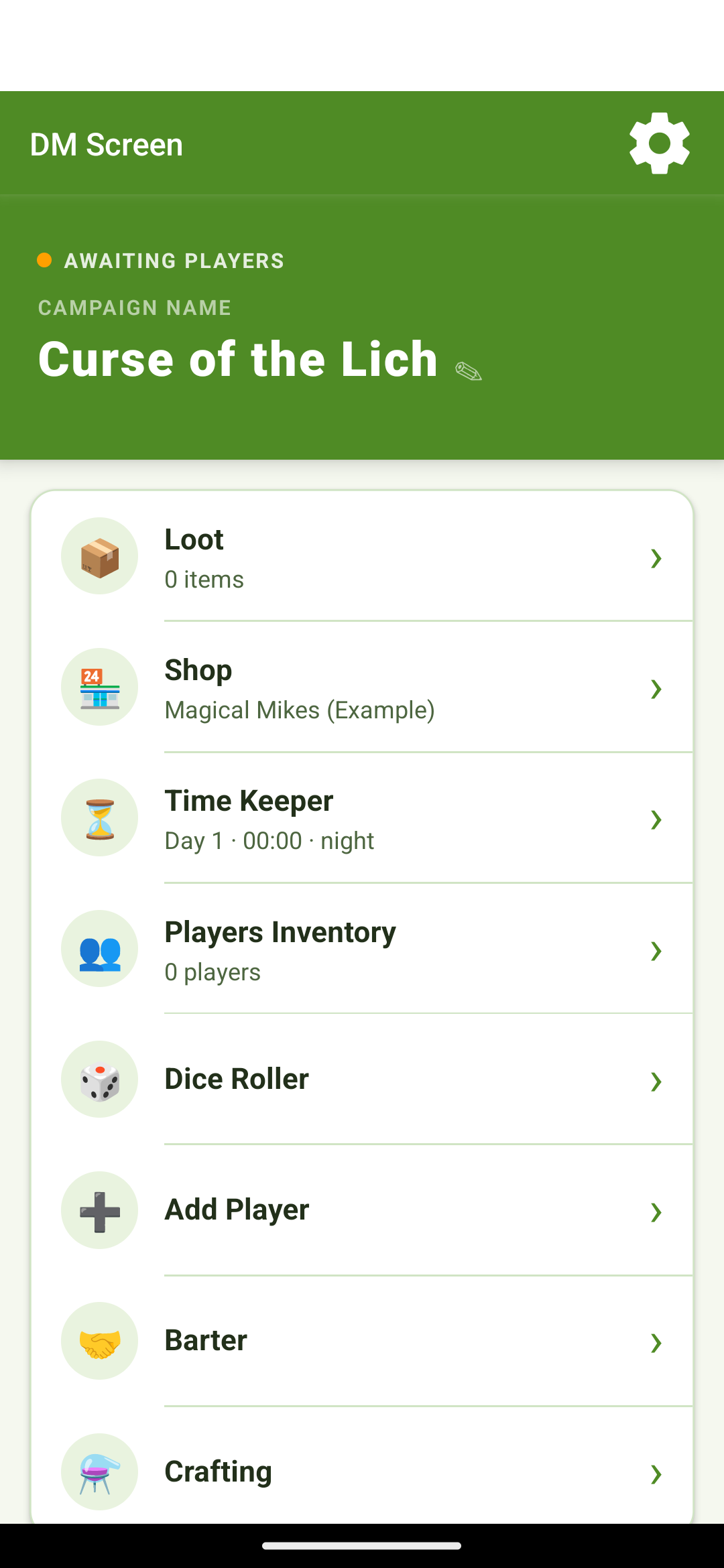
Elemental Inventory
What it runs
Everything that used to be a spreadsheet
One shared inventory, economy, and clock for the whole table — hosted by the DM's own device, no cloud database required.
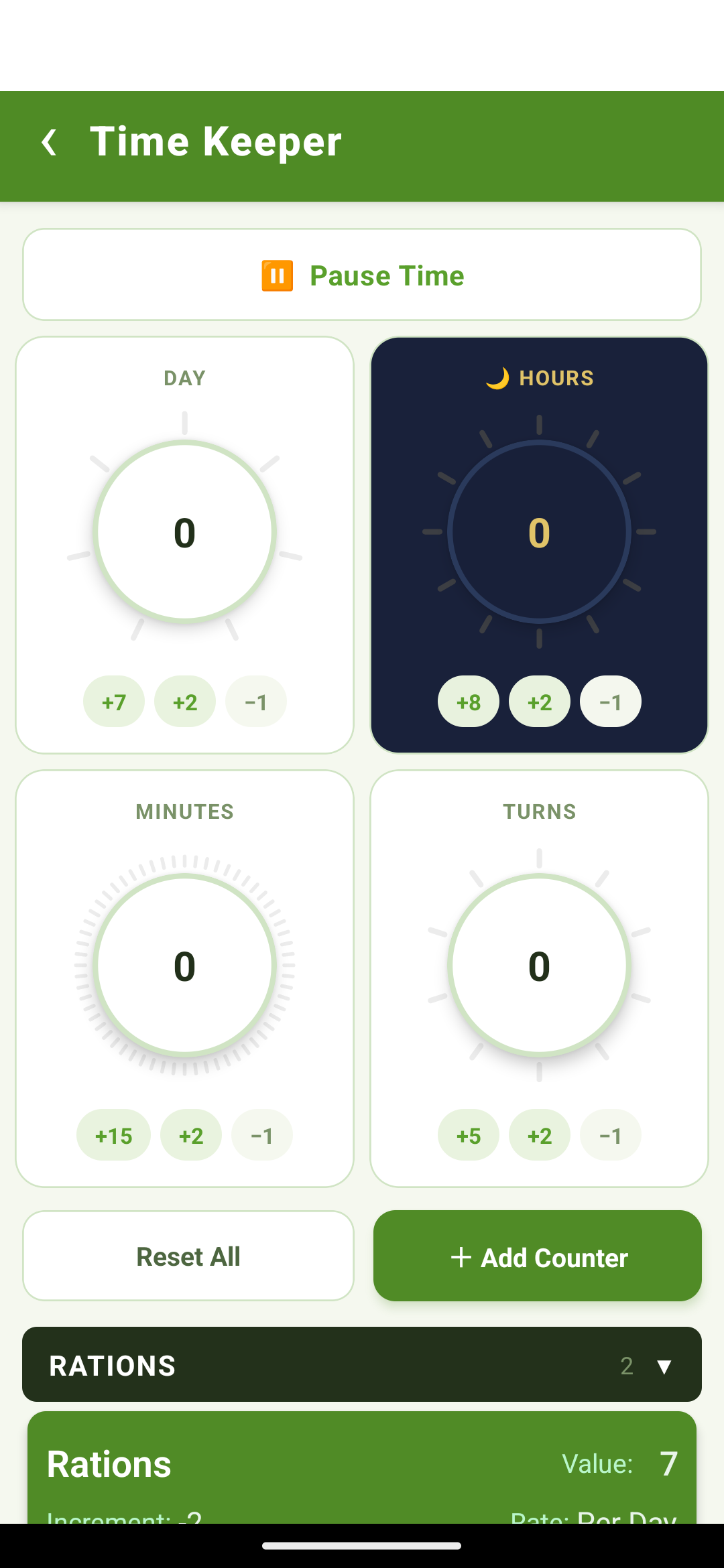
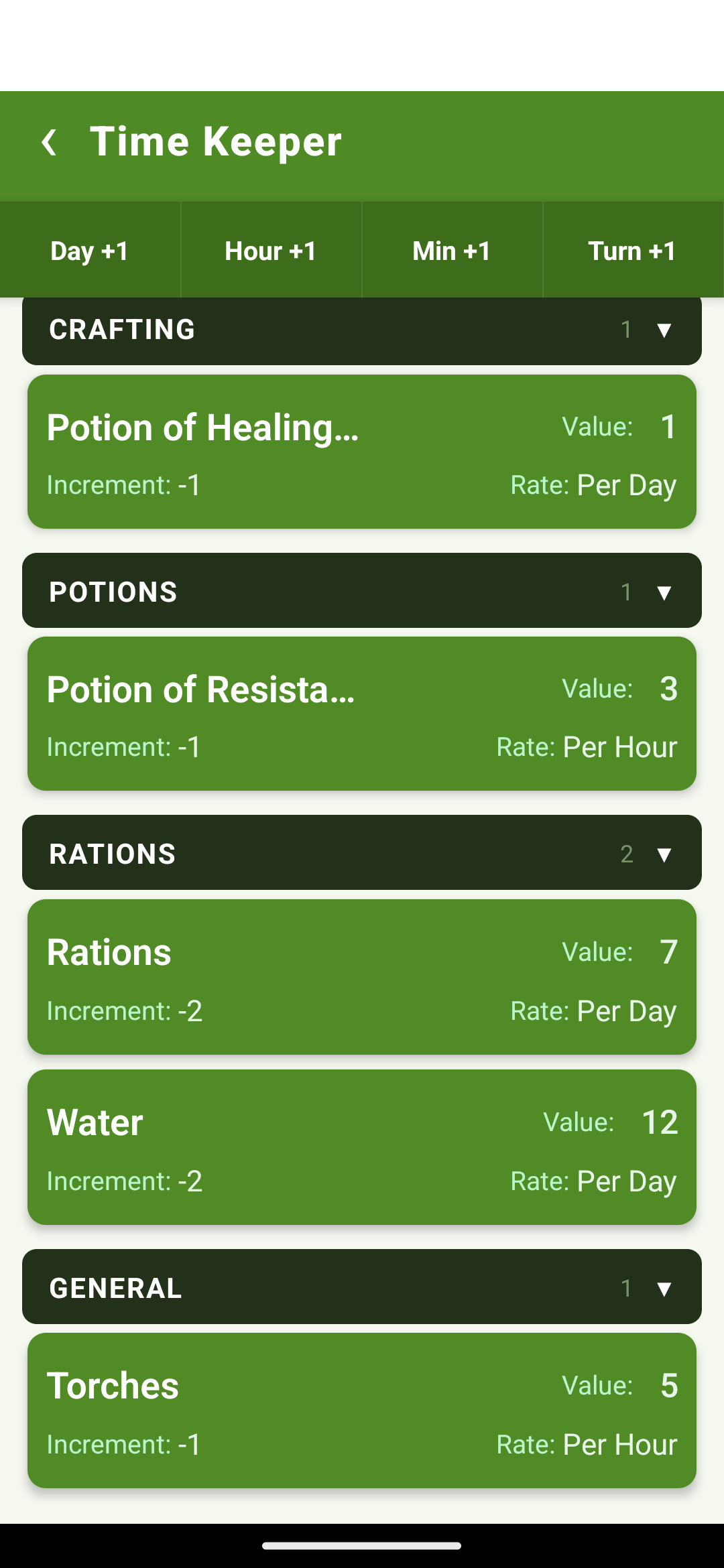
 Time Keeper
Advances turns, minutes, hours, and days independently, with counters that tick on a Per Turn / Per Hour / Per Day rate — or sit at Static so nothing touches them. A counter can be wired directly to an item, in a player's pack or sitting in Loot or Party Loot, gold included, so the two stay in sync on their own. Roll tables and dice-on-top-of-a-flat-increment are both supported for anything that should vary tick to tick.
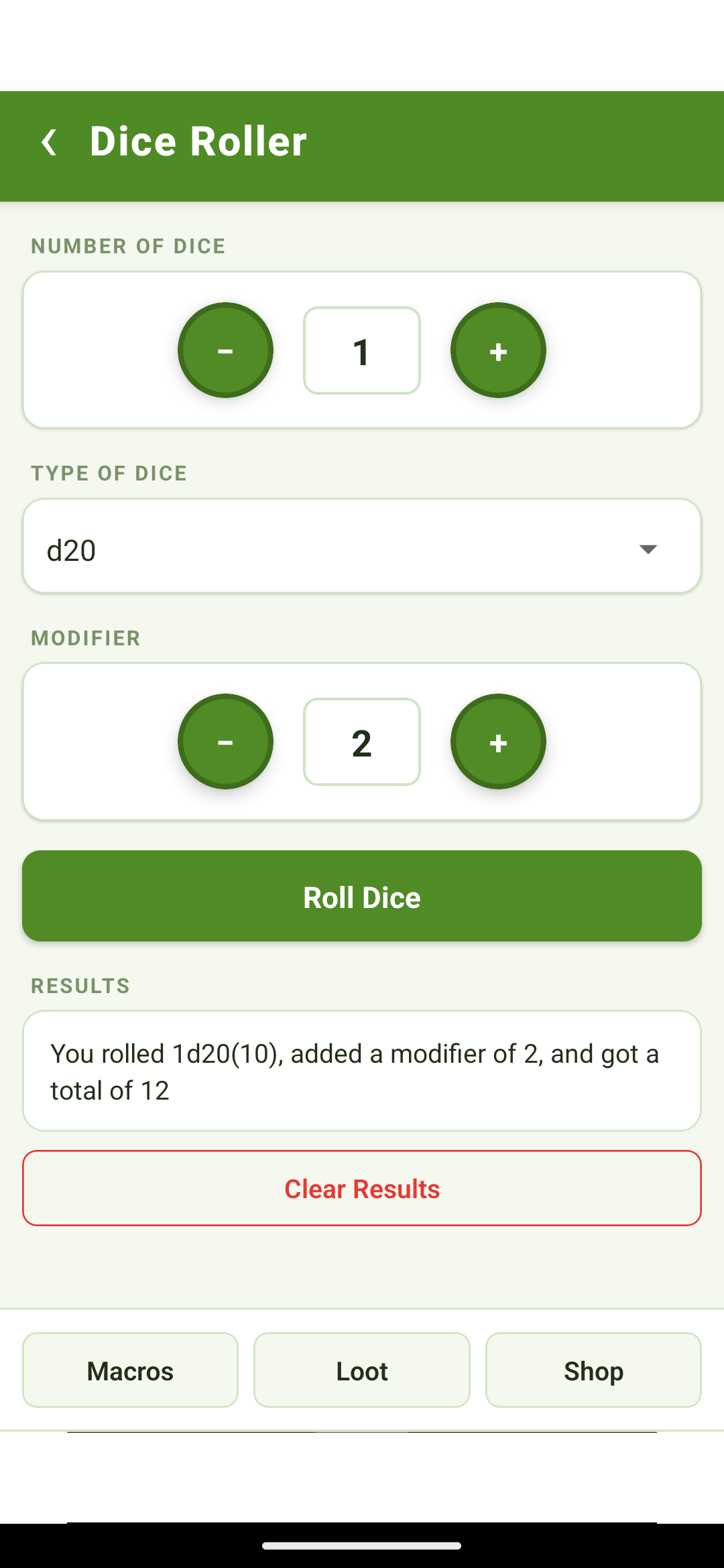
🎲Dice Roller
Standard d4–d100, a dice count, and a flat modifier, with a running result log for the table to scroll back through.
 Loot & Party Loot
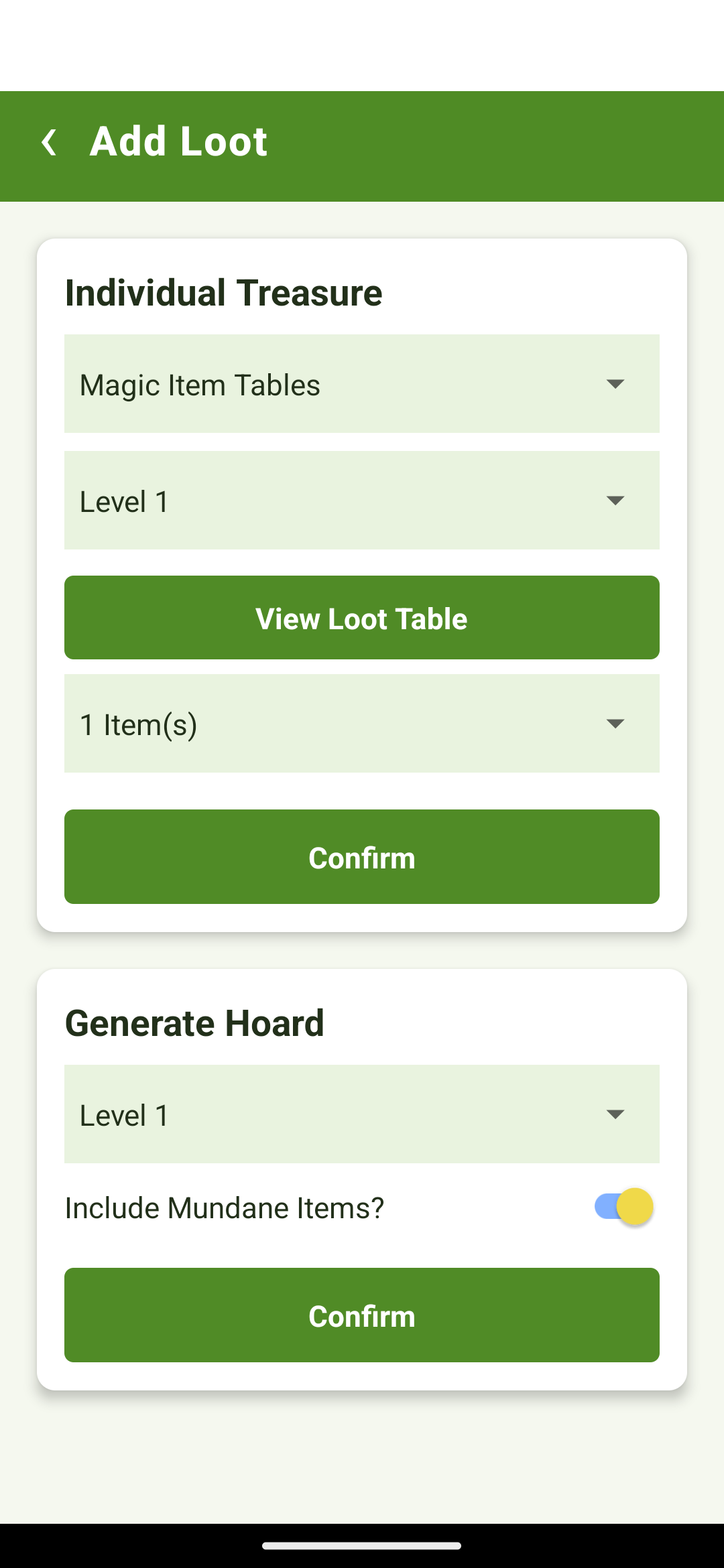
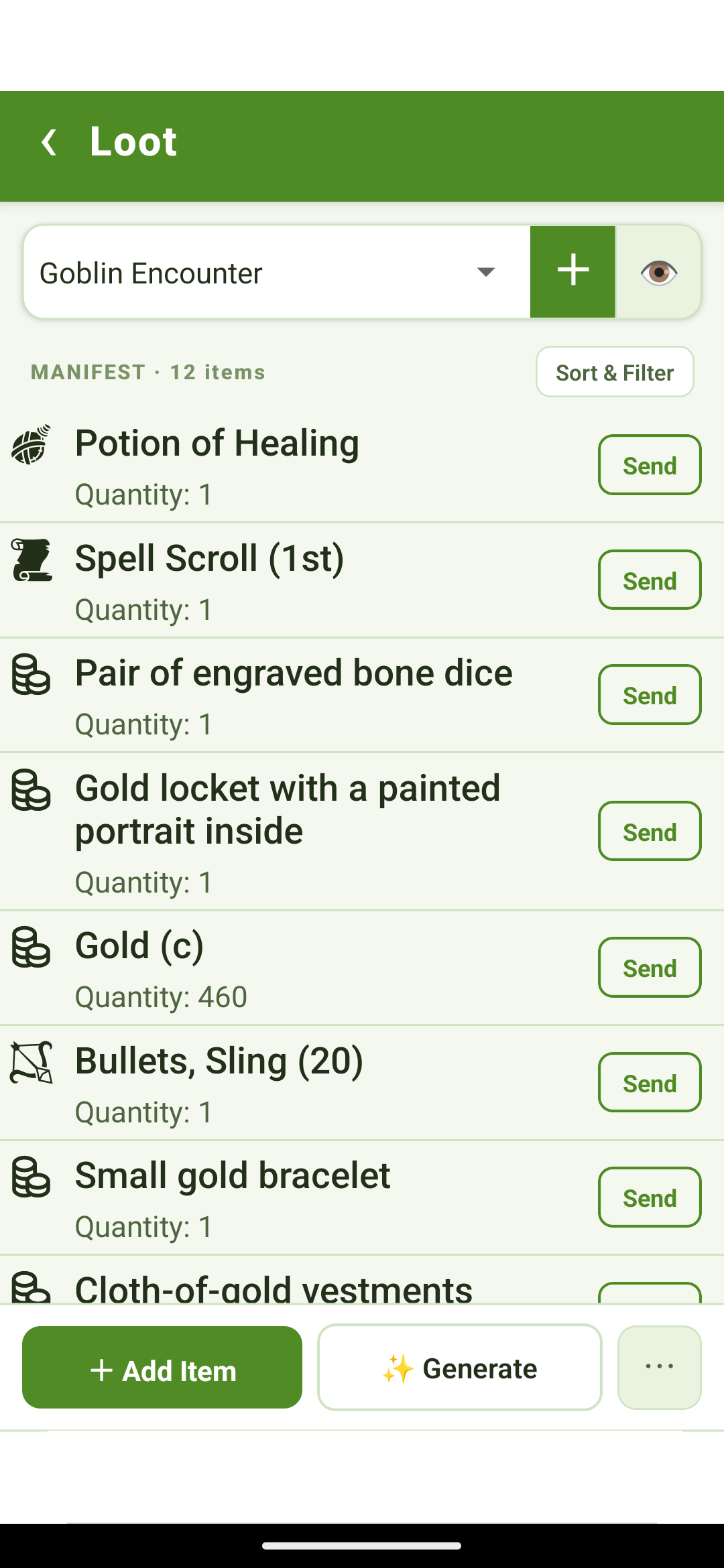
Drop found treasure to a single player, or to a shared Party Loot pool that splits the carrying weight across the whole party. The DM can roll individual finds or a full hoard off built-in tables, with custom loot tables for custom systems, and Party Loot can split its gold evenly across every connected player in one tap.
 Shop
Shop
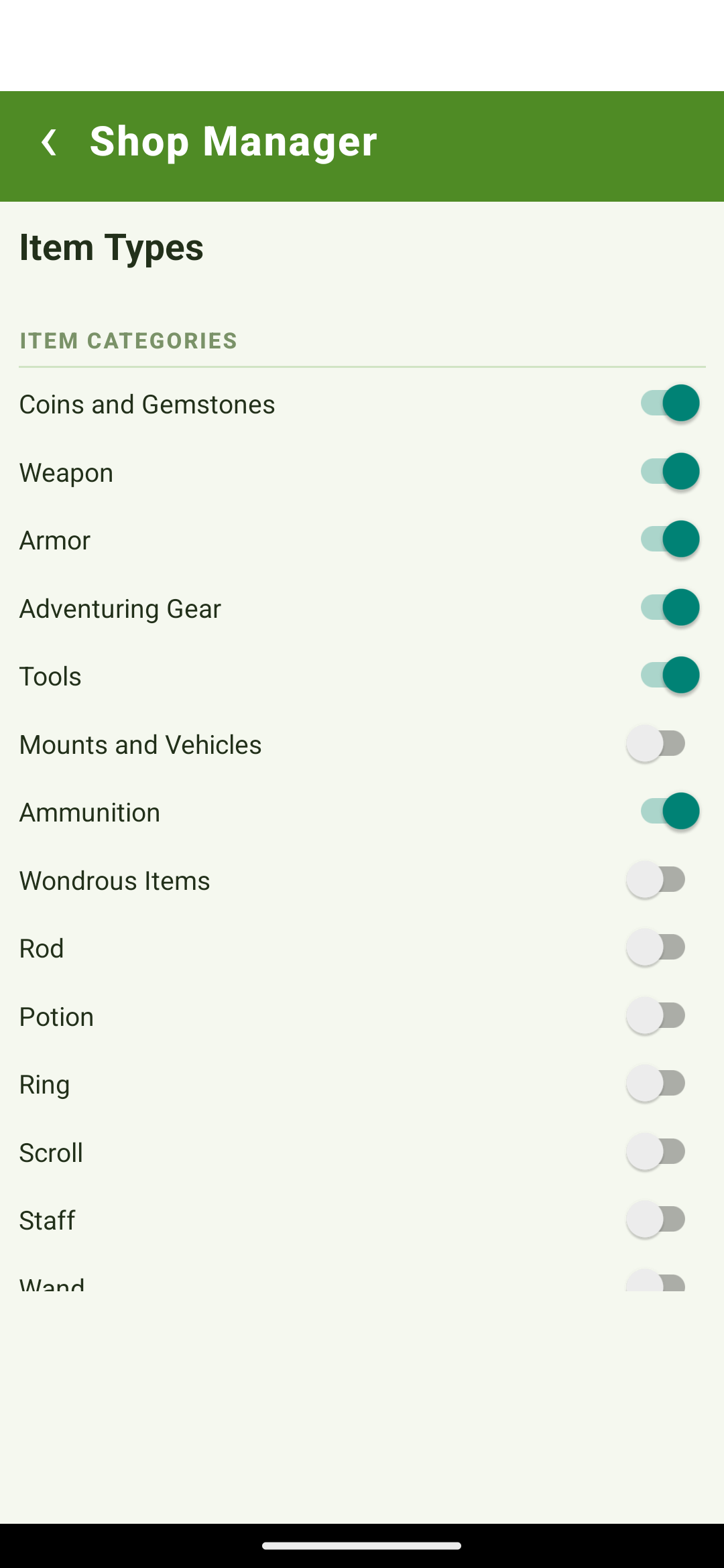
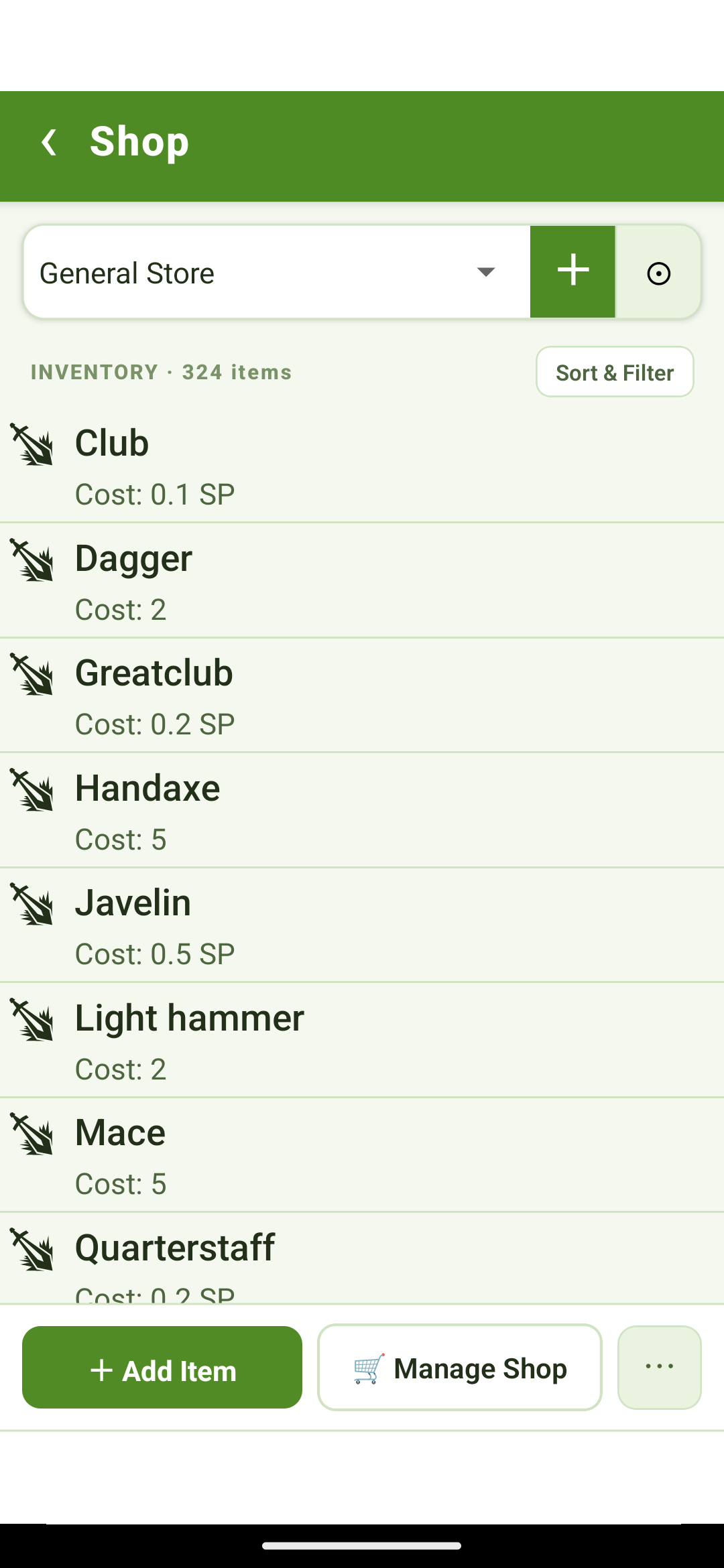
Players spend their own gold against the current shop's stock, with discounts and fees per purchase. The DM runs multiple shop tabs at once, each auto-stocked by category and rarity. Lifestyle Expenses, Hirelings, and spellcasting services don't get bought outright — picking one opens a per-day gold drain instead.
 Barter
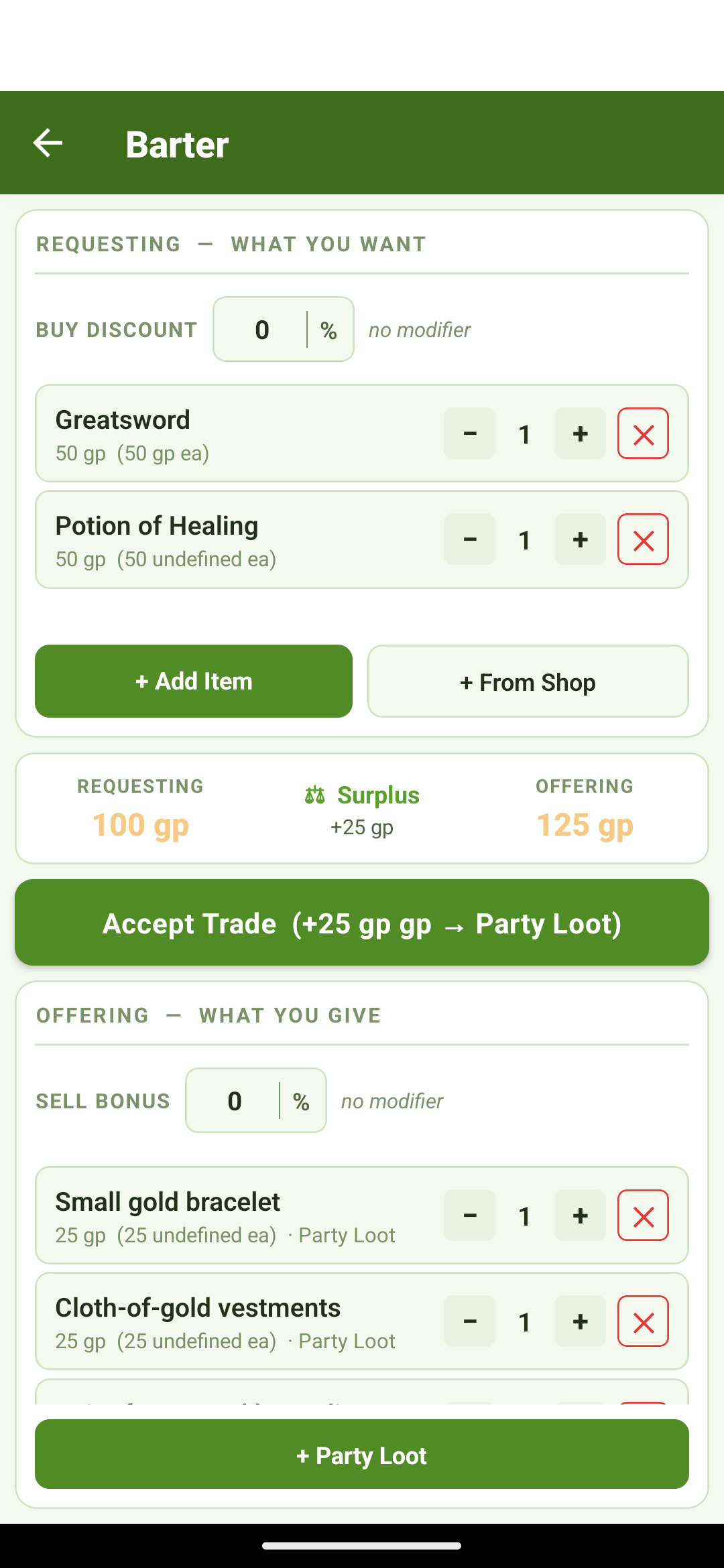
A two-sided trade board — Requesting on top, Offering underneath — pulling from the full catalog, the current shop, a personal pack, or Party Loot. A live balance bar shows even, short, or surplus, and the board is shared with everyone connected in real time.
 Inventory
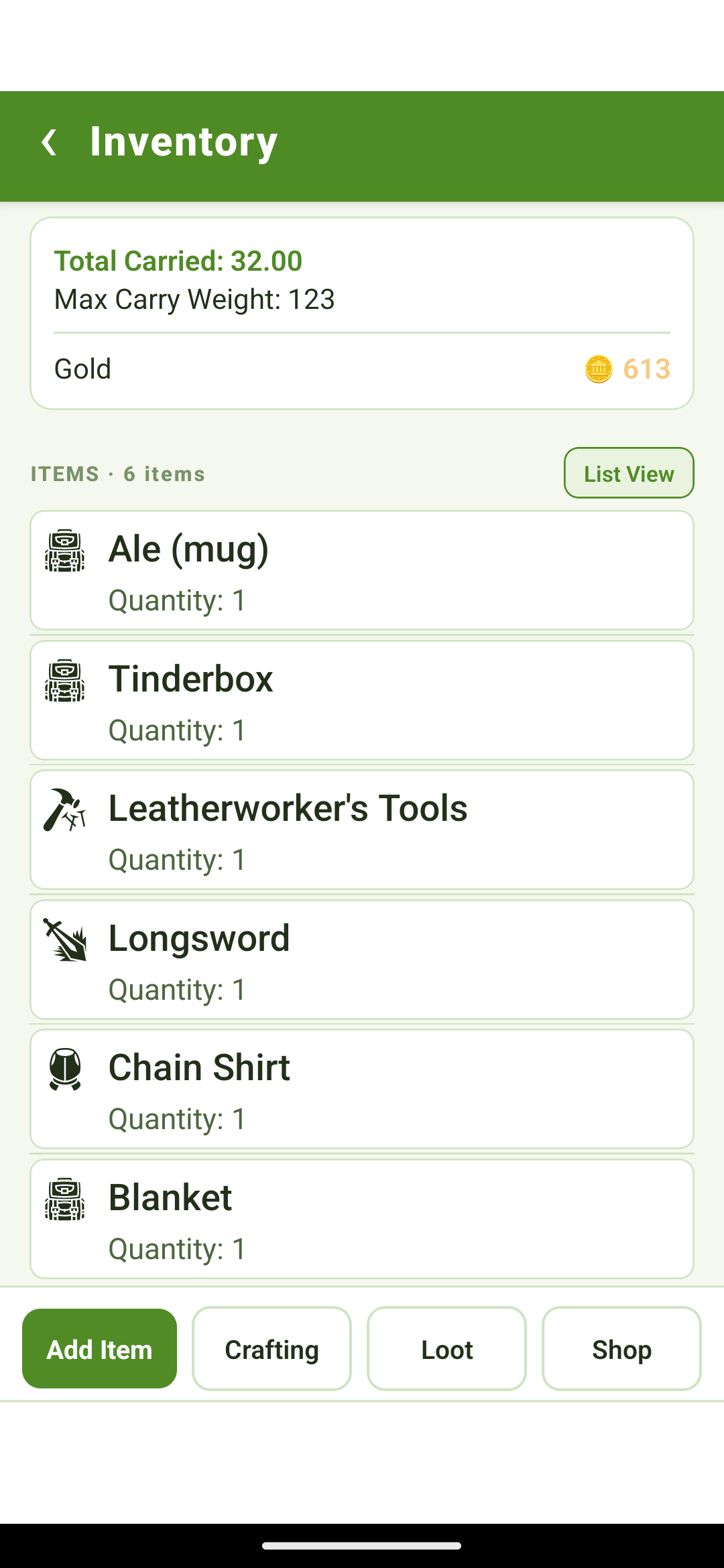
Sort by name, weight, value, or category, with encumbrance and gold visible at a glance. Long-press any item to inspect, sell, discard, or hand it to another party member or to Party Loot.
 Custom Items & Inventory Sets
Author campaign-specific items on the fly, or swap in an entirely different catalog from an uploaded JSON file — your own homebrew system or setting, replacing the default list everywhere it's used. Updating it mid-session pushes to every connected player without anyone reconnecting. Building your own catalog? See the Custom Inventory Guide for the full file format.
 Crafting
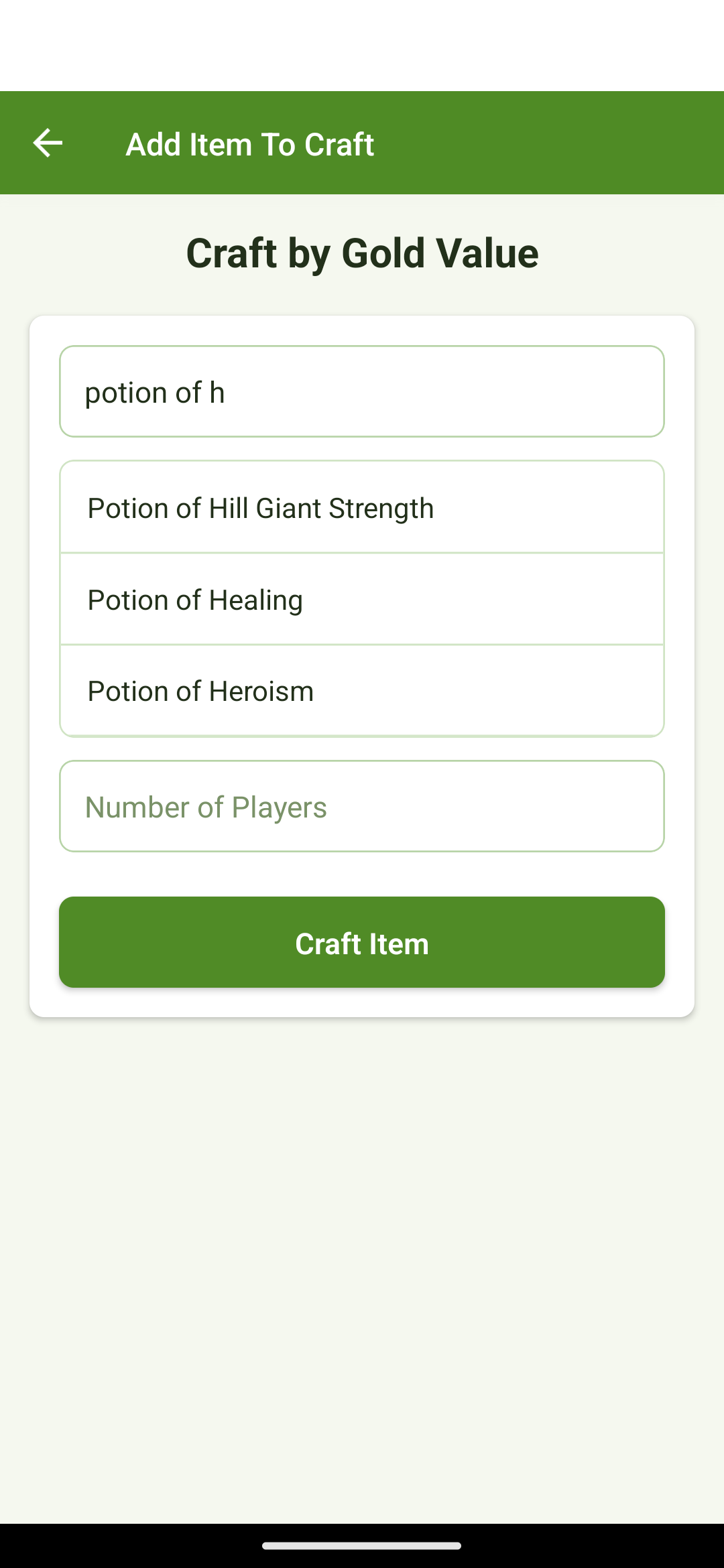
The crafting form itself changes with the ruleset — SRD, homebrew, and a Fallout-style variant that gates on a rarity-scaled skill check, with a chance to lose materials on a failed roll.
 Macros
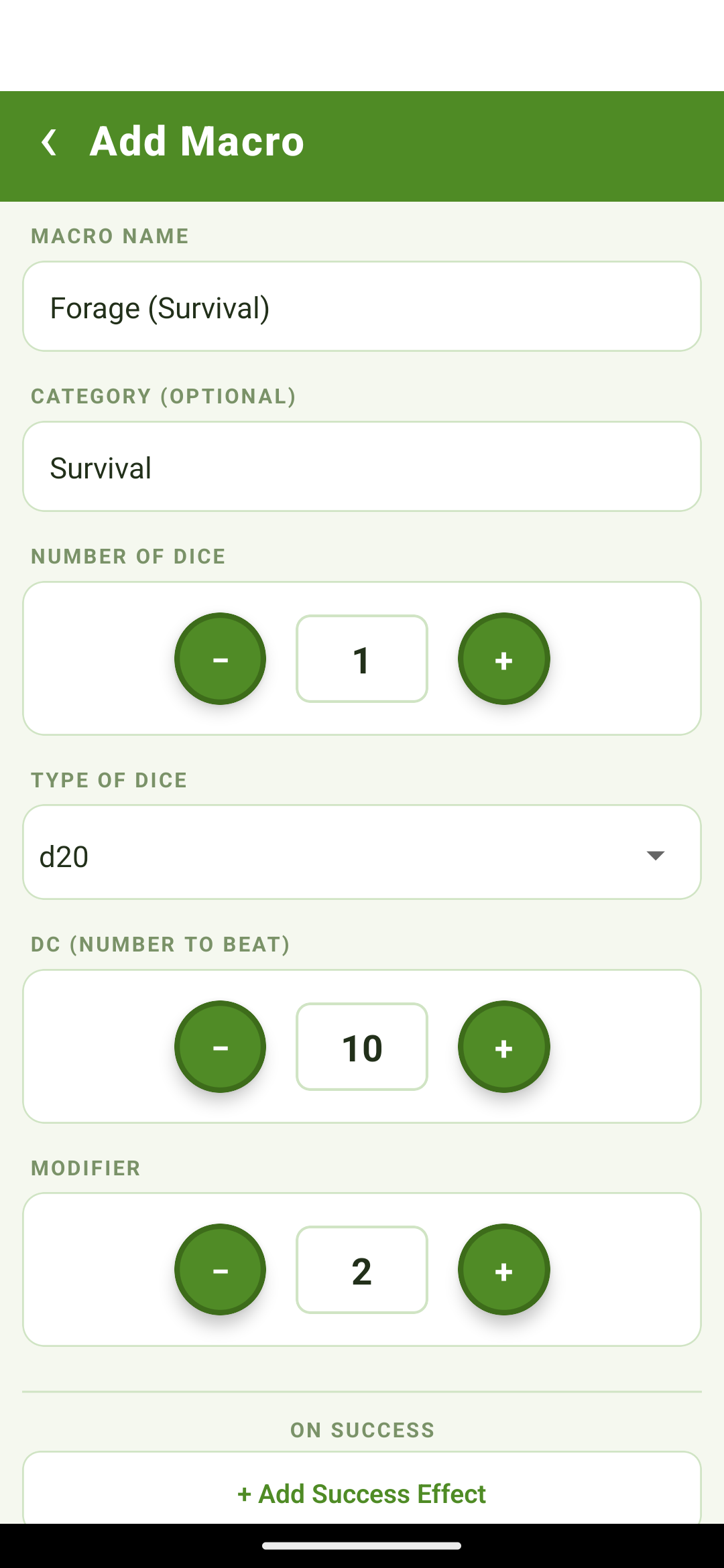
Roll a die against a DC, then apply separate success and failure effects — an item's quantity or a Counter's value, each with its own bonus dice. Macros can chain into a follow-up macro on pass or fail, with a shared roll history for the table.
 Multiplayer & Game Management
The DM hosts, players join with an invite code — up to ten per game — and everything syncs peer-to-peer with no server holding your game state. Multiple saved game slots per device mean running more than one campaign is never a conflict.